Below you will find details on the herb or plant selected on the previous page. Please read and research carefully before attempting to make any homemade remedies using medicinal plants, as some have contraindications, may not be suitable for certain groups of people, or may be inappropriate for specific health conditions. Feel free to reach out—we’ll advise as best we can.

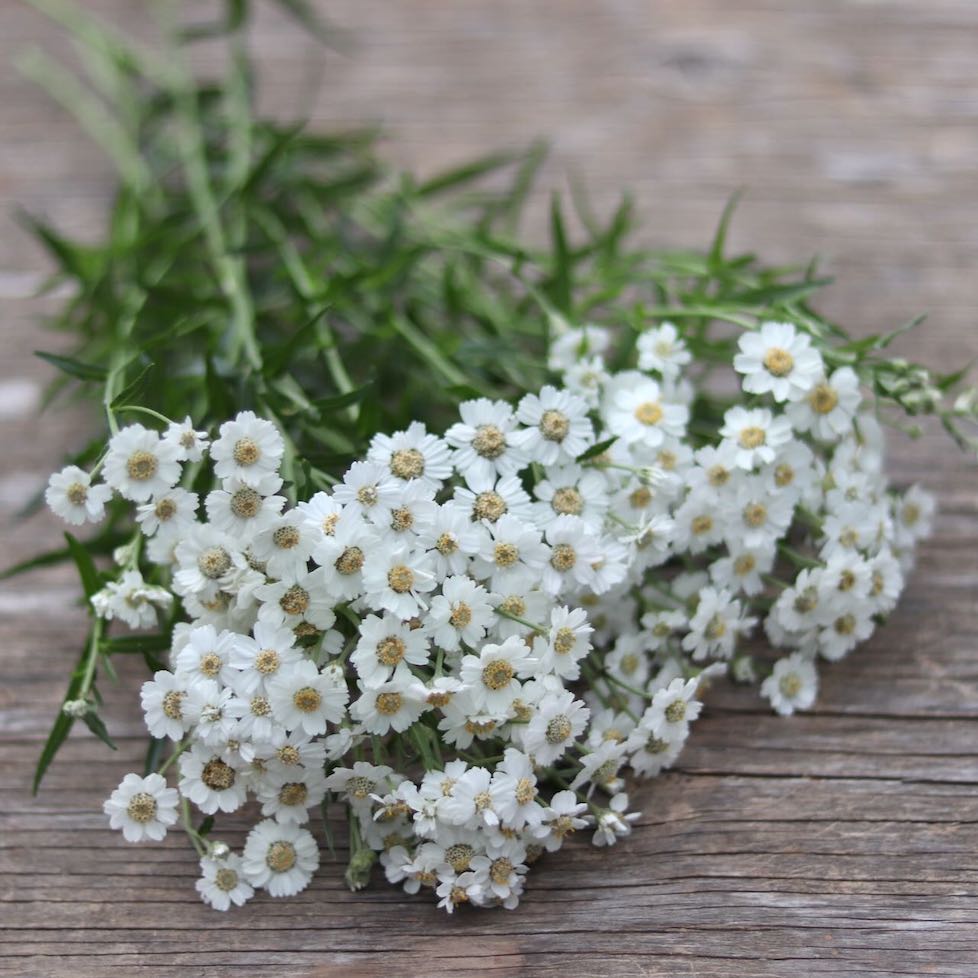
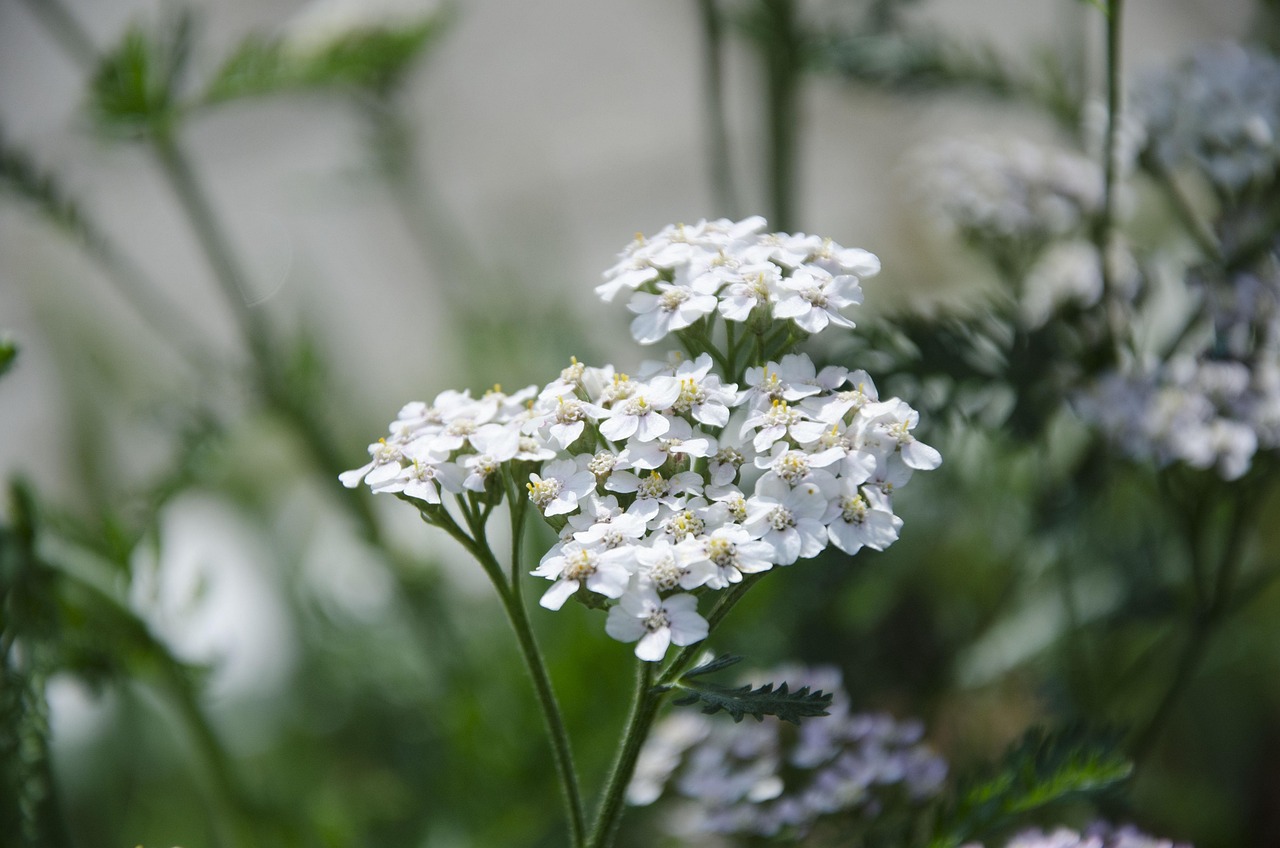
Achillea millefolium—commonly known as Yarrow—is a tough, spreading perennial herb commonly found in meadows, roadsides, and gardens across temperate regions. It has distinctive feathery, fern-like leaves and flat clusters of small white or pinkish flowers that bloom from summer into autumn. It commonly grows wild in open fields and meadows. Here are some close-up views of the plant in full bloom:
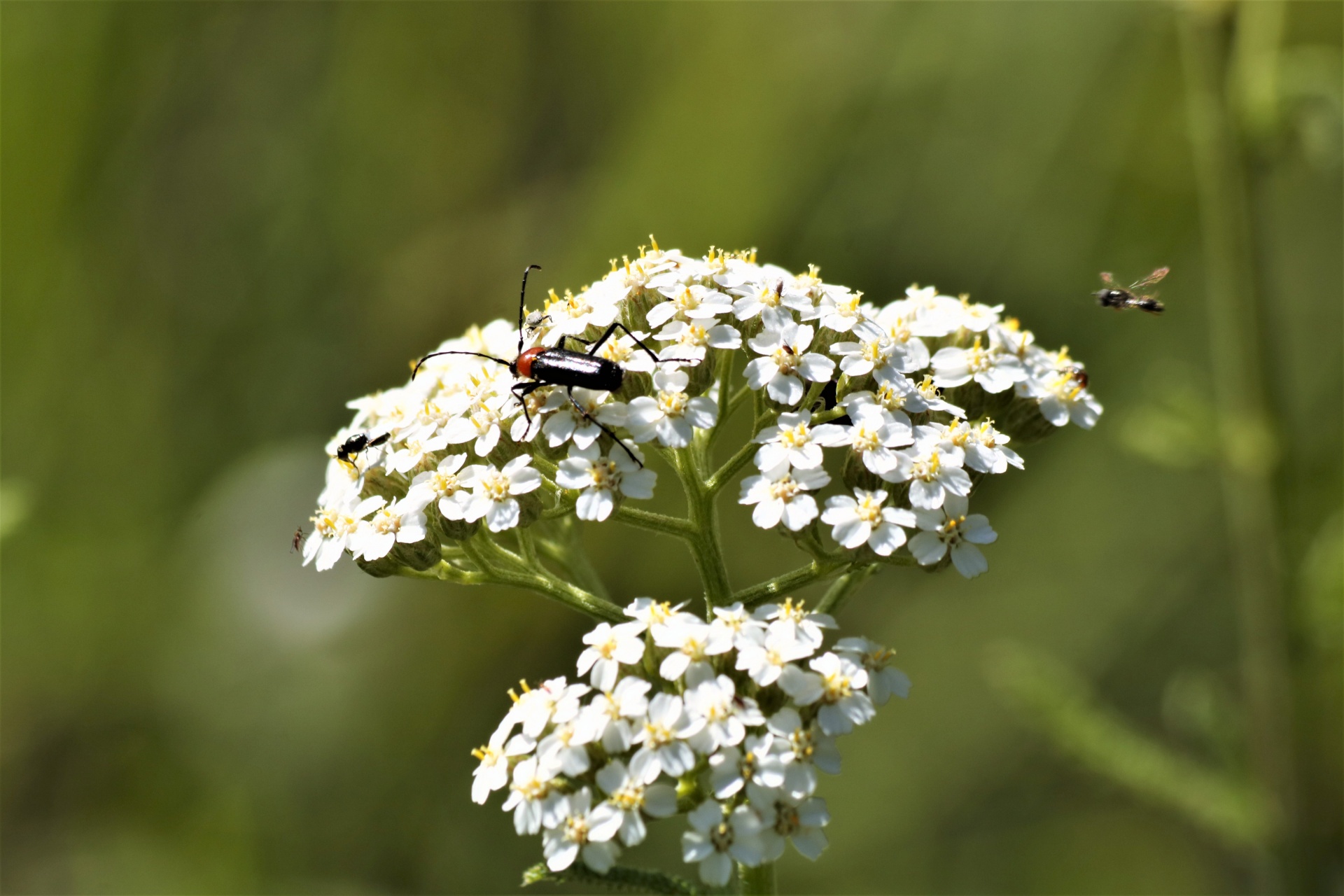
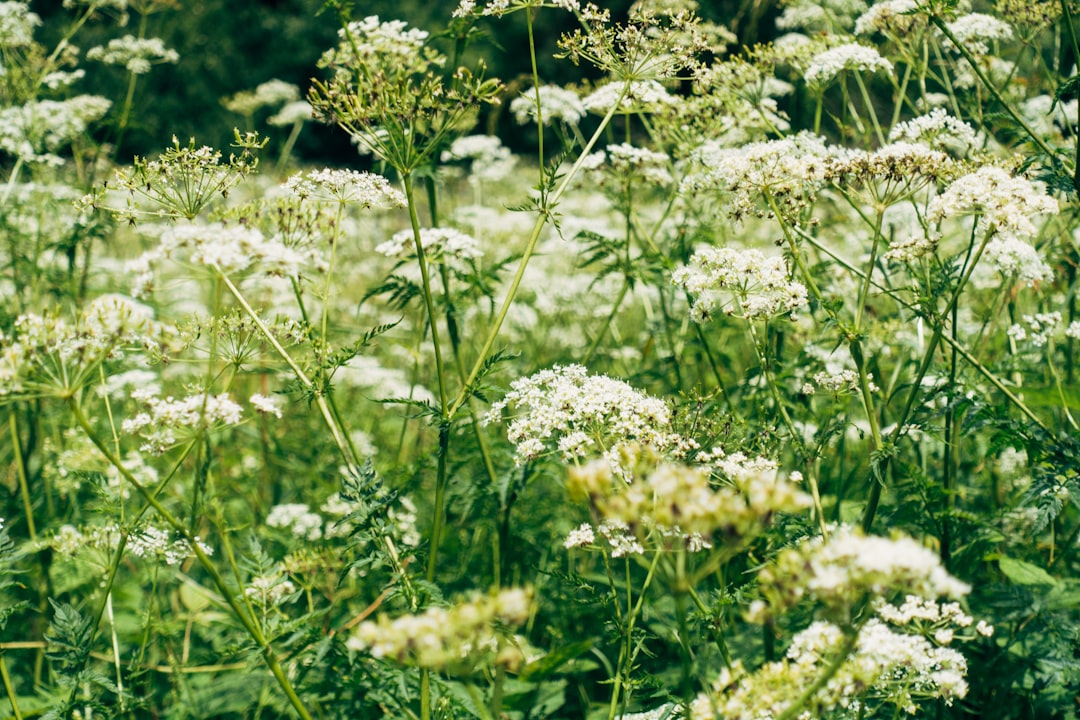
In gardens, it attracts pollinators like bees while deterring some pests. Young leaves can add a mild, aromatic bitterness to salads or soups. Always consult a herbalist or healthcare professional before using it, especially if you have allergies or take medications.

Some ideas for usage:

Wound Healing & Bleeding Control

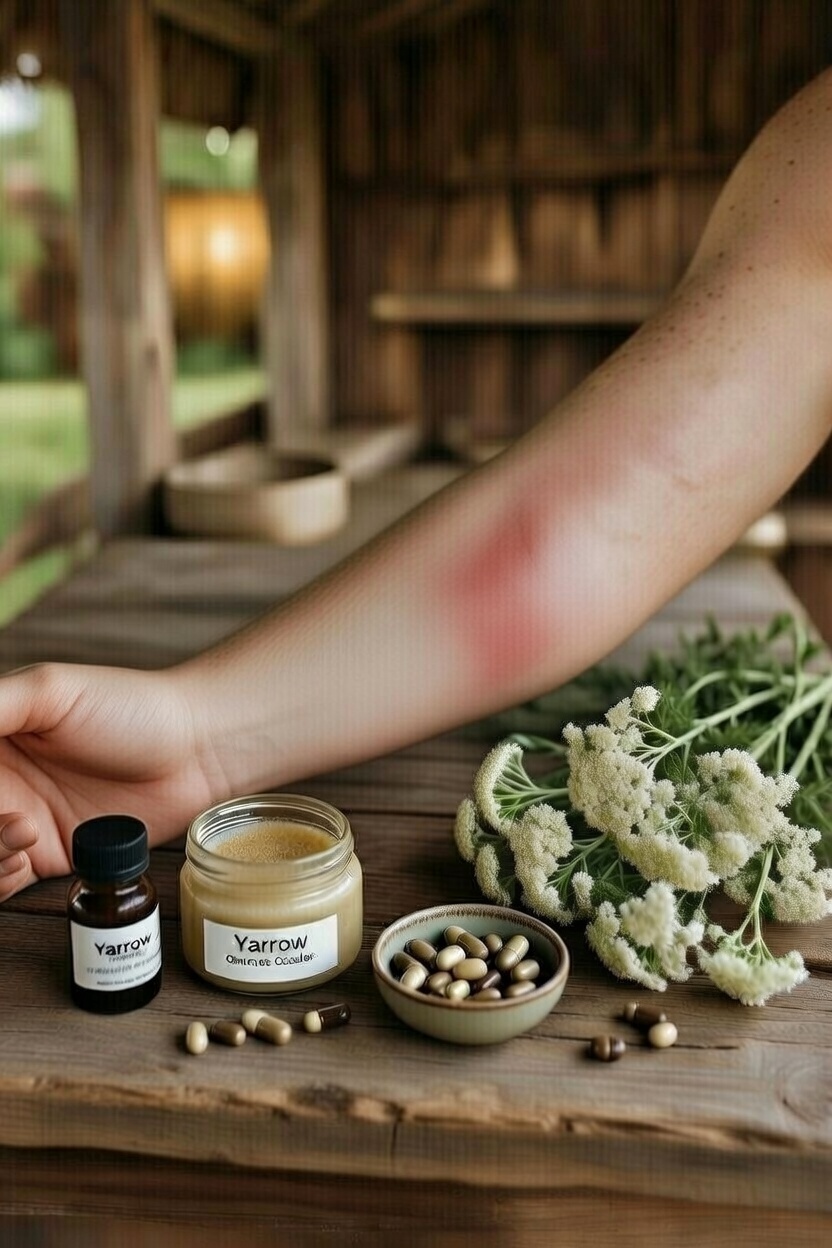
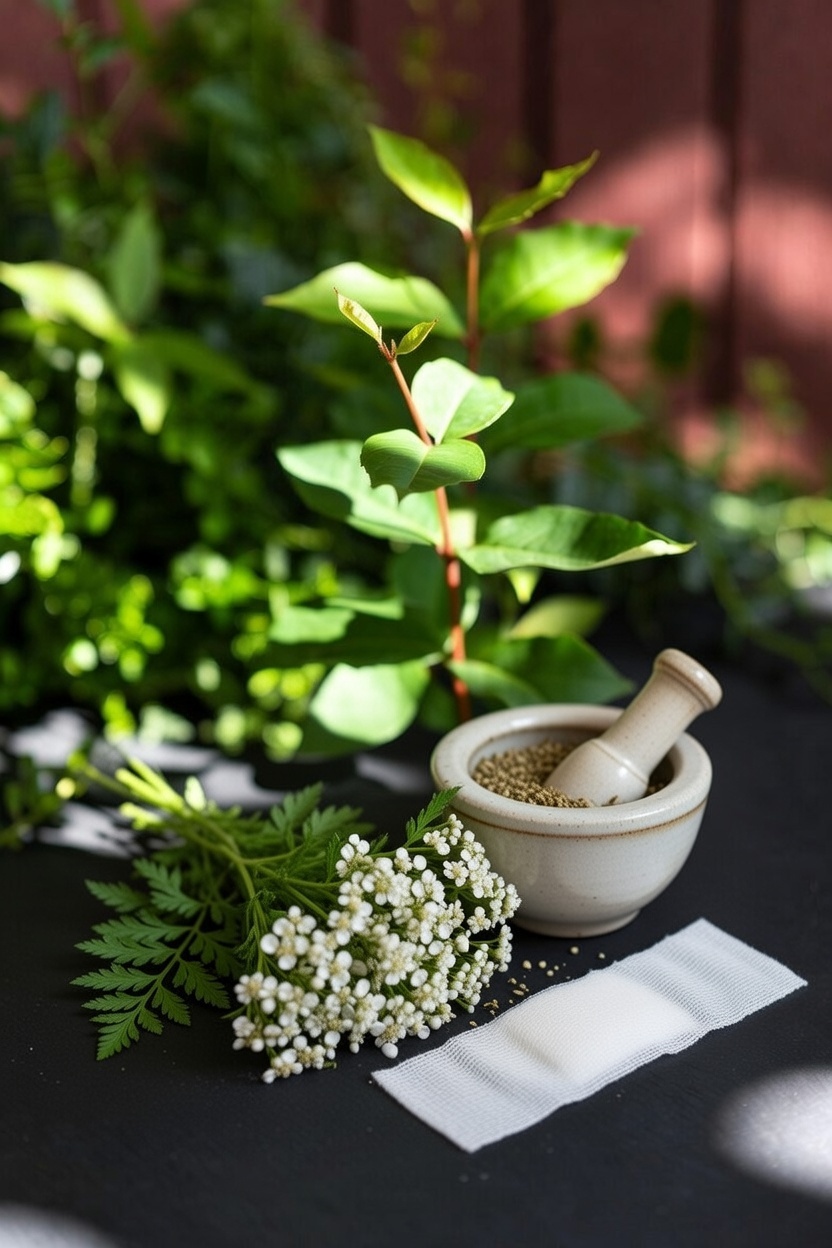
Yarrow has earned its nickname "soldier’s woundwort" for its remarkable ability to help stop bleeding, reduce inflammation, and prevent infection in cuts, scrapes, and bruises. Fresh or dried leaves and flowers can be crushed into a simple poultice and applied directly to the wound, then bandaged in place. For longer-term use, infuse dried yarrow in oil (such as olive or coconut), strain it, and blend with beeswax to create a soothing salve or ointment. A diluted tincture made from yarrow is also popular for dabbing on minor wounds as a natural antiseptic.
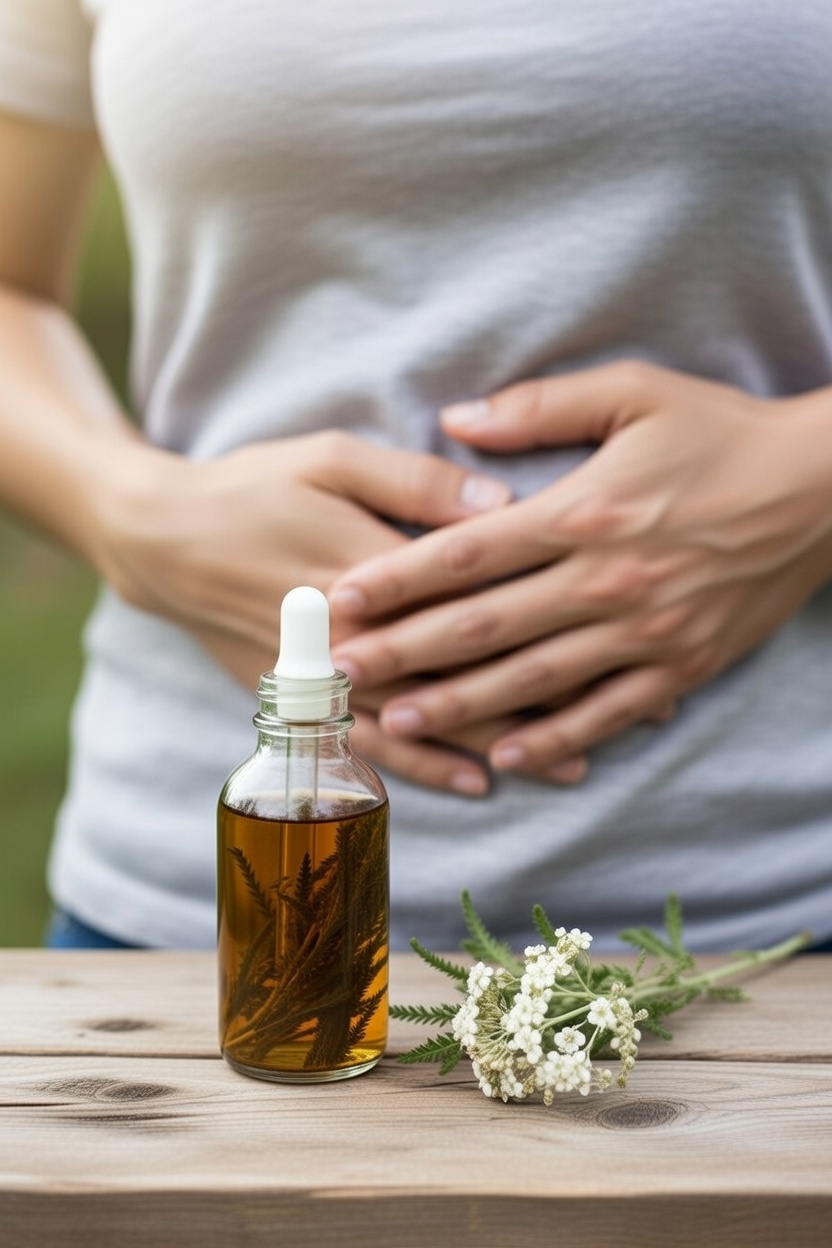
Yarrow is widely used to ease bloating, cramps, indigestion, and symptoms of IBS or ulcers thanks to its anti-inflammatory and digestive-stimulating properties. The most common preparation is a gentle tea: steep 1–2 teaspoons of dried leaves and flowers in hot water for 10–15 minutes and drink 1–3 cups daily (blending with peppermint improves the flavor). For stronger support, take a tincture of 20–30 drops in water two or three times a day. Some herbalists infuse yarrow in apple cider vinegar for 2–4 weeks to create a digestive tonic taken by the tablespoon diluted in water.

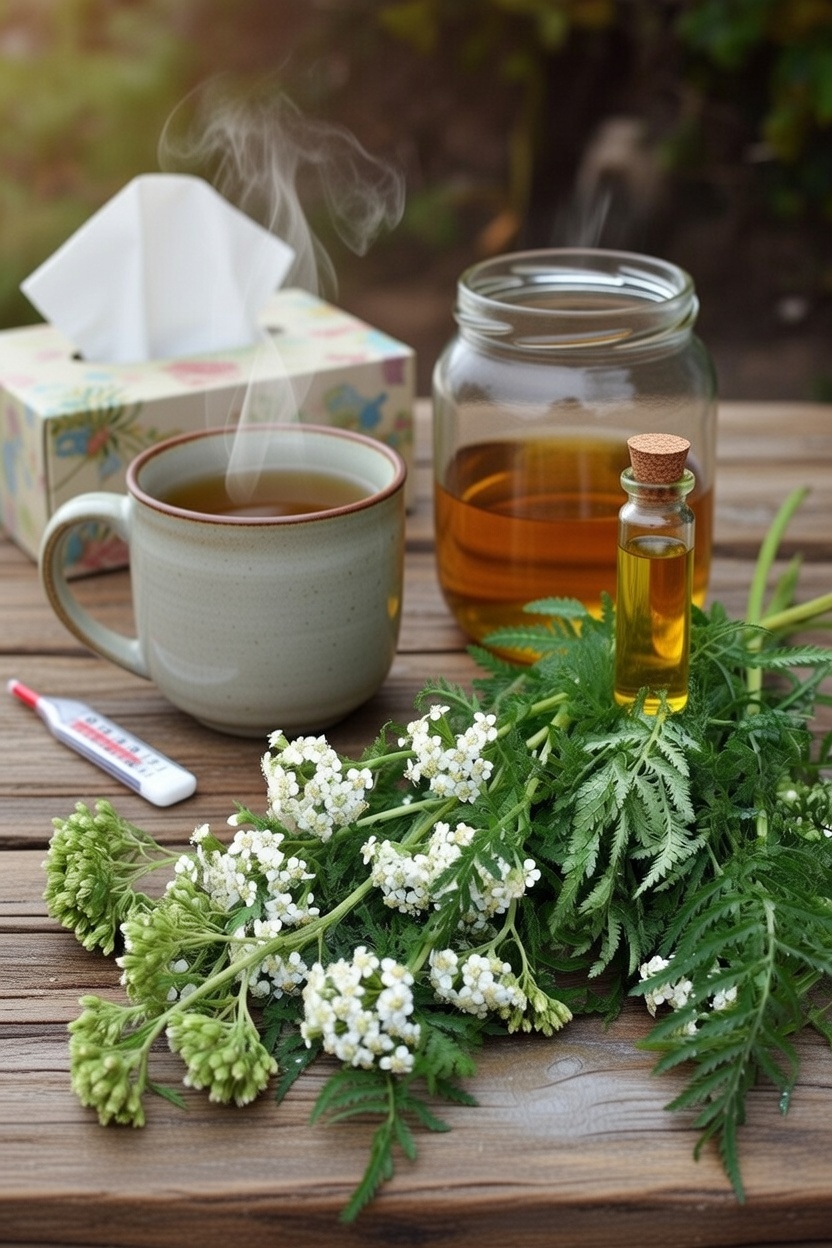
Traditionally, yarrow is valued for promoting sweating to break fevers, clearing mucus, and relieving coughs or congestion during colds and flu. A strong tea or decoction made by boiling the roots or leaves is a classic remedy, often combined with elderflower for enhanced fever-reducing effects. For sinus relief, add dried yarrow to boiling water and inhale the steam under a towel. A simple syrup can also be made by simmering yarrow tea with honey or sugar to soothe a persistent cough.

Yarrow acts as a mild antispasmodic and diuretic, making it a popular choice for easing menstrual cramps, heavy bleeding, and general discomfort. Many people drink 1–2 cups of yarrow tea daily in the days leading up to and during menstruation (often blended with chamomile for extra calming). A tincture of 15–30 drops taken two or three times a day is another common method for cramp relief. For broader relaxation and pain reduction, infuse dried yarrow in bathwater as a soothing soak.

Yarrow is frequently applied topically to calm eczema, rashes, sunburns, or joint inflammation due to its anti-inflammatory and soothing effects. A homemade oil-infused salve is a favourite—apply it directly to irritated or dry skin. For sunburns or acne, a gentle yarrow hydrosol (distilled flower water) can be misted on the affected area. A boiled yarrow wash or poultice is also used to soothe eczema flare-ups or rub on joints to ease arthritis-related swelling and discomfort.

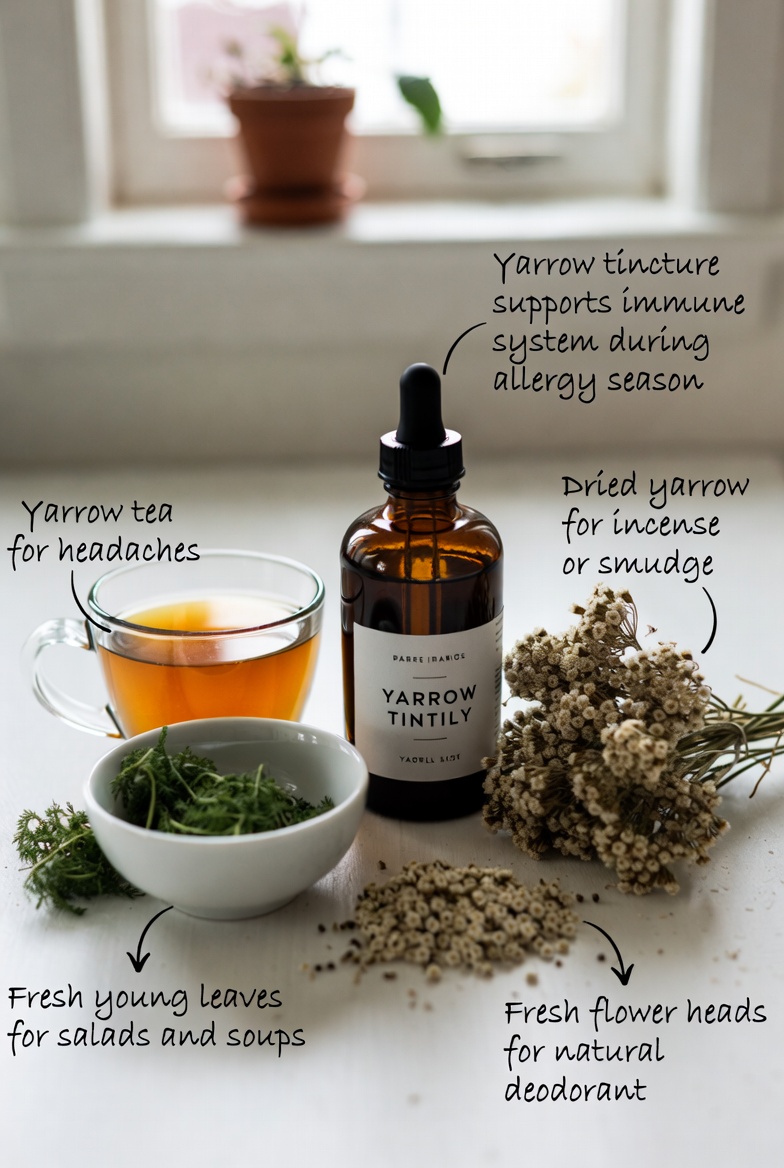
Beyond its primary uses, yarrow is taken as a tea or tincture to relieve headaches (sometimes with leaves rubbed on the temples), support the immune system during allergy season, or add a mild bitter flavour to salads and soups when young leaves are used fresh. Dried yarrow can be burned as incense to repel insects, and fresh flower heads rubbed under the arms serve as a natural deodorant in some traditions.

Basic Yarrow Alcohol Tincture (Folk Method)

Important Safety Note
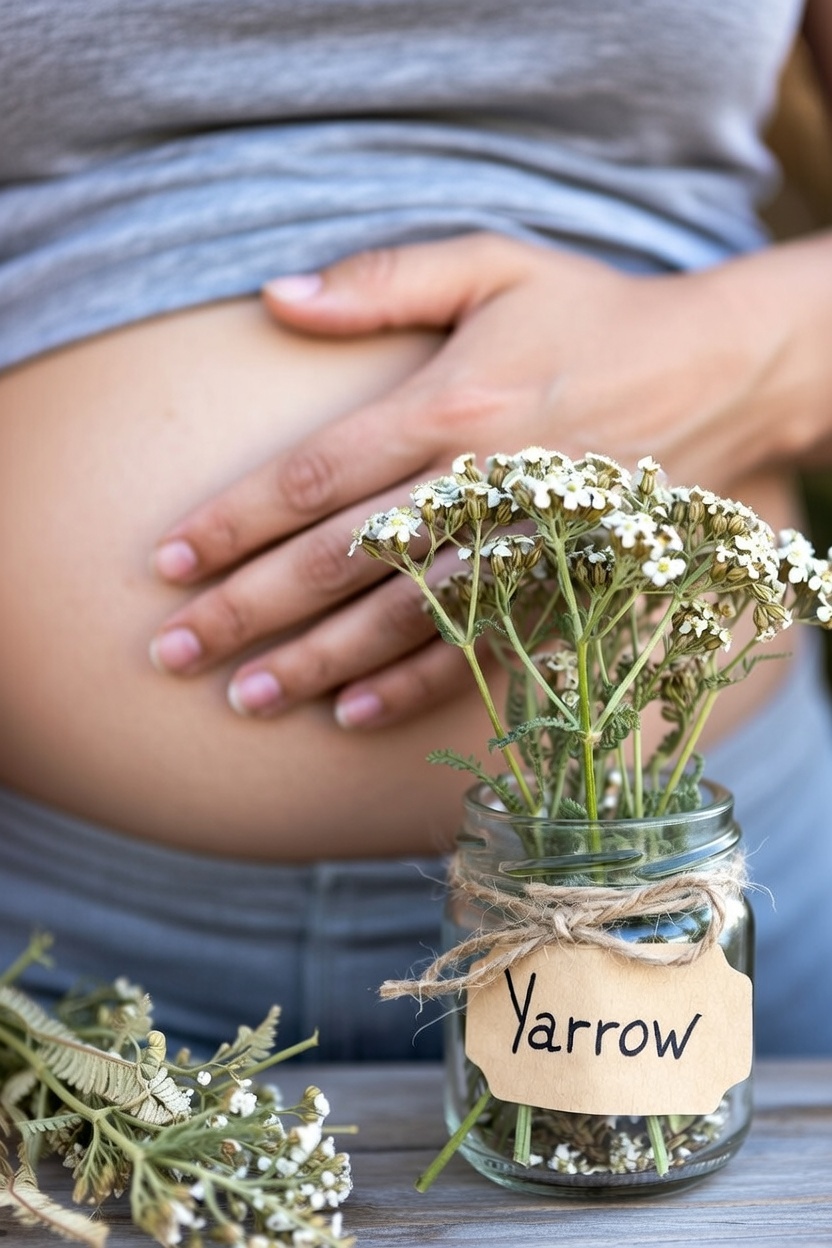
Yarrow is generally safe for most people in moderate amounts, but it contains thujone (in small quantities), so avoid high doses long-term. Do not use during pregnancy (may stimulate uterine contractions) or breastfeeding without professional advice. Avoid if allergic to the Asteraceae family (ragweed, daisies, etc.—can cause reactions).

May interact with blood thinners, lithium, or sedatives—consult a doctor or herbalist first, especially if on medications.

Ingredients
Fresh or dried yarrow (aerial parts only: flowers, leaves, and tender stems — best harvested when in full flower).
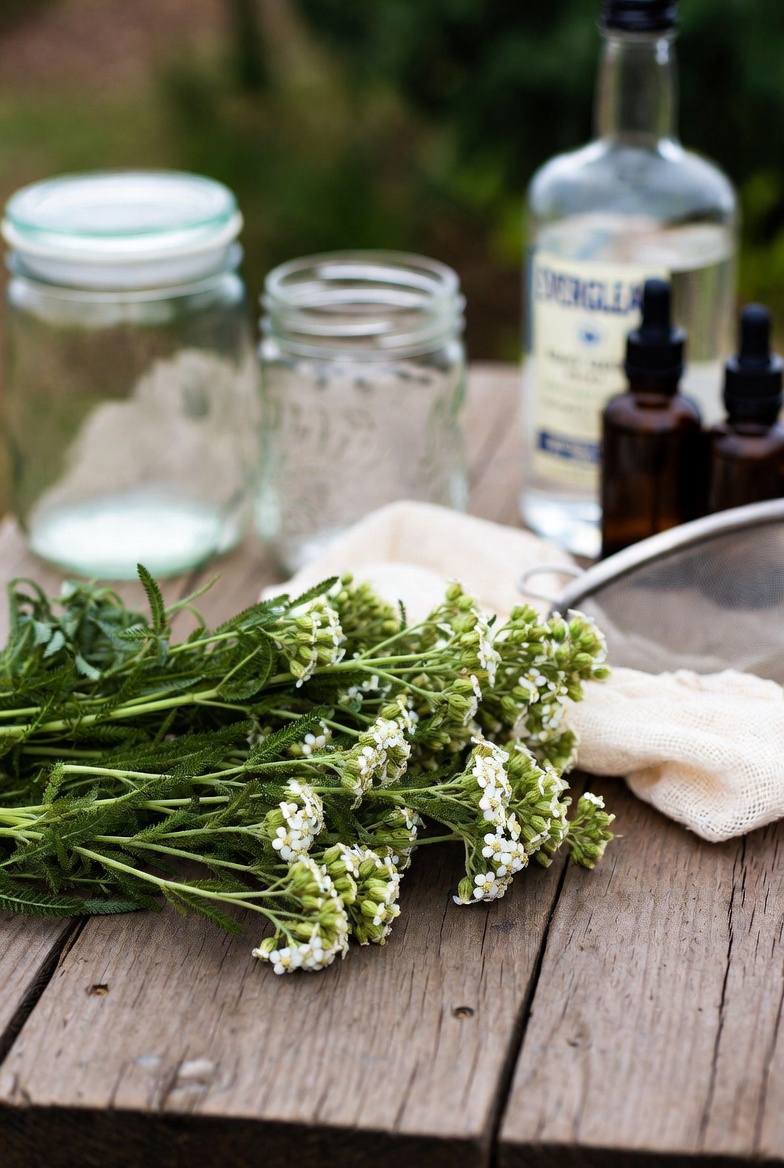
High-proof alcohol: Standard: vodka 80–100 proof (40–50% ABV) — widely available and effective.
Stronger option: Everclear/190-proof grain alcohol (for maximum extraction; dilute to ~50–70% if desired).
Clean glass jar with tight-fitting lid (e.g., Mason jar).
Cheesecloth or fine mesh strainer.
Dark glass dropper bottles (amber or cobalt) for final storage.

Steps
1. Prepare yarrow: Chop fresh (or crush dried) and fill jar loosely — 1/2 – 3/4 full (fresh) or 1/3 – 1/2 full (dried).
2. Pour alcohol over plant material until fully submerged + 1–2 inches extra liquid.
3. Seal tightly; store in cool, dark place for 4–6 weeks (up to 8 for potency), shaking daily or often.
4. Strain through cheesecloth, pressing herbs well to extract liquid; bottle in dark glass. Label with date, contents, and use notes.

Storage
Cool, dark place → shelf life 5+ years (alcohol preserves indefinitely if sealed).

Dosage
(traditional general guidelines).

Internal: 20–40 drops (~1/2–1 ml) in water/tea, 2–3 x daily; start low to assess tolerance.

Topical
(wounds, etc.): dilute in water or apply sparingly.

(Consult a herbalist or healthcare professional before internal use)

Basic Yarrow Glycerine Tincture (Folk Method / Glycerite)

Ingredients
Fresh or dried yarrow (aerial parts only: flowers, leaves, and tender stems — best harvested when in full flower).
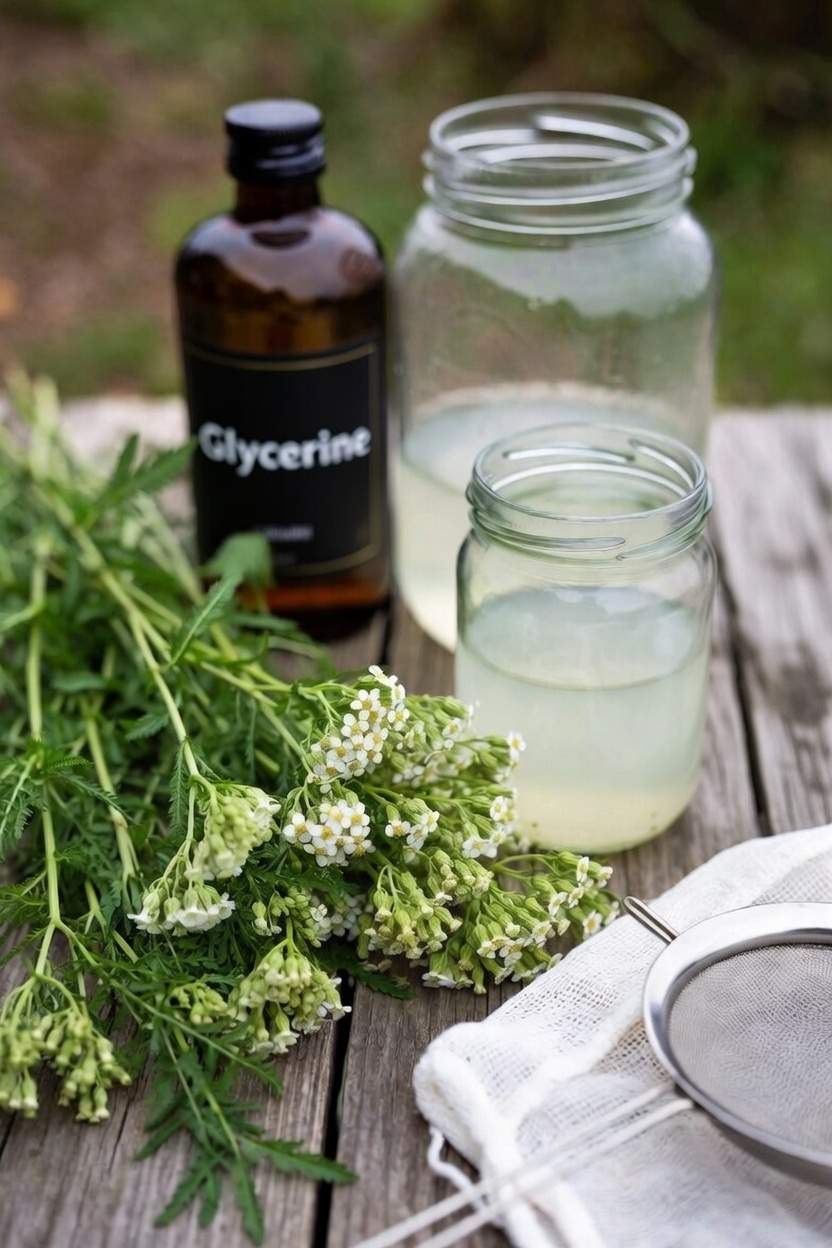
Food-grade vegetable glycerine (non-GMO, preferably palm- or soy-derived; available at health stores or online).
Distilled water (required for dried yarrow; optional/adjustable for fresh to aid extraction).
Clean glass jar with tight-fitting lid (e.g., Mason jar).
Cheesecloth or fine mesh strainer.
Dark glass dropper bottles (amber or cobalt) for final storage.

Steps
1. Prepare yarrow: Chop fresh (after light wilting 1–2 hours if desired) or crush dried; fill jar loosely — 1/2 – 3/4 full (fresh) or 1/3 – 1/2 full (dried).
2. Add glycerine mixture: Dried: Mix 3 parts glycerine to 1 part distilled water; pour over herbs until submerged + 1–2 inches extra.
Fresh: Use 100% glycerine or 70–75% glycerine + 25–30% water; cover fully so herbs float freely.
3. Seal tightly; store in cool, dark place for 4–8 weeks (6 typical), shaking daily or often. Top off if herbs rise above liquid.
4. Strain through cheesecloth, pressing herbs well; bottle in dark glass. Label with date, contents, and use notes.

Storage
Cool, dark place → shelf life 2–5 years (shorter than alcohol; make smaller batches).

Dosage
(traditional general guidelines)

Adults (internal): 1/2–1 tsp (~30–60 drops or 1–2 ml) in water/tea/juice, 2–3 x daily; start low to assess tolerance.

Children: Lower dose (e.g., 1/3–1/2 tsp); consult pediatric herbalist.

Topical: Apply undiluted or diluted for skin issues.

Optional Faster Method (Sealed Simmer)
Use slow cooker/double boiler: Prepare as above, heat gently in water bath on low for 3 days (monitor water level); then strain as usual. (Consult a herbalist or healthcare professional before use, especially internally or for children.)

Safety Reminders
Same as alcohol tinctures:
Avoid in pregnancy, if allergic to Asteraceae family, or with certain meds (e.g., blood thinners).

Glycerites are milder but still potent—consult a professional for therapeutic use.

DISCLAIMER

We firmly believe herbs are among the most effective and natural ways to support the body’s healing—gifts from God’s wise design for our wellbeing, often gentler and more harmonious than many pharmaceutical options. However, herbs are potent and individual responses vary, so it is essential to consult your doctor (GP), qualified healthcare specialist, pharmacist, or registered medical herbalist before using any herb—especially if pregnant, breastfeeding, on medications, or managing a health condition. Your health decisions are your own responsibility; this information is shared for educational purposes only.